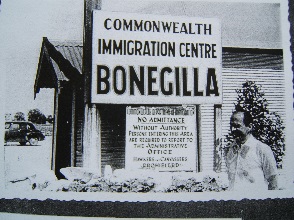
Understanding our ancestry often involves untangling complex webs of historical events and individual stories. One such strand in the tapestry of Australia's multicultural history is the wave of Dutch immigration in the 1950s. This article will provide an overview of this migration wave, focusing on the Netherlands Dutch immigration to Australia in the 1950s, and explore the resources available for those seeking to trace their Dutch-Australian lineage.
Historical Context
In the aftermath of World War II, Europe faced severe economic challenges and a housing crisis. Australia, on the other hand, sought to boost its population and economy by encouraging immigration. The Australian Government introduced the Assisted Passage Migration Scheme to attract migrants, leading to a significant wave of Dutch migration in the 1950s.
Dutch Immigration in the 1950s
Between 1947 and 1951, over 30,000 Dutch migrants arrived in Australia, drawn by the promise of a fresh start and a better life. These migrants contributed significantly to Australia's cultural diversity and economic growth.
Tracing Your Dutch-Australian Lineage
For those seeking to understand their Dutch-Australian heritage, several resources can assist in your research.
National Archives of Australia
The National Archives of Australia contains extensive records of immigration and naturalization. These records can provide invaluable information about your Dutch ancestors, including arrival dates, ship names, and even personal details such as occupation and religion.
Ancestry.com.au
Ancestry.com.au is a major genealogy database with a wealth of Australian records. It's a great place to start your search, with access to census data, birth, death, and marriage records, as well as military records.
Trove
Trove, an initiative of the National Library of Australia, provides free access to digitized newspapers, books, photos, and more. It's a goldmine of historical information, and a great resource for tracing your Dutch-Australian lineage.
State Archives
State archives, such as the NSW State Archives, the Victoria BDM, and the Queensland State Archives, house a range of historical records, from birth, death, and marriage certificates to parish records and census data.
Conclusion
The Dutch migration to Australia in the 1950s is a significant chapter in both countries' histories. As you embark on your journey to uncover your Dutch-Australian heritage, remember that each document and record you find is a testament to the resilience and courage of those who made the journey before you. Happy researching!